Sydney’s fast-finishing Central Park has the largest green façade on any residential tower in Australia. Indesign Media’s Editorial Director Paul McGillick reports from French botanist and vertical garden expert Patrick Blanc’s final inspection of the project.
July 10th, 2014
It still has two years to go, but the Central Park development on Sydney’s Broadway opposite UTS has already transformed the city.
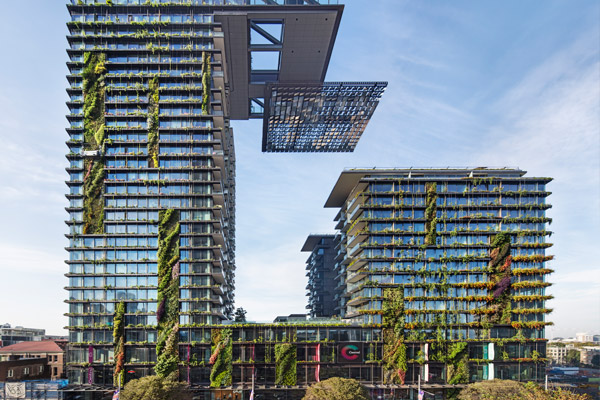
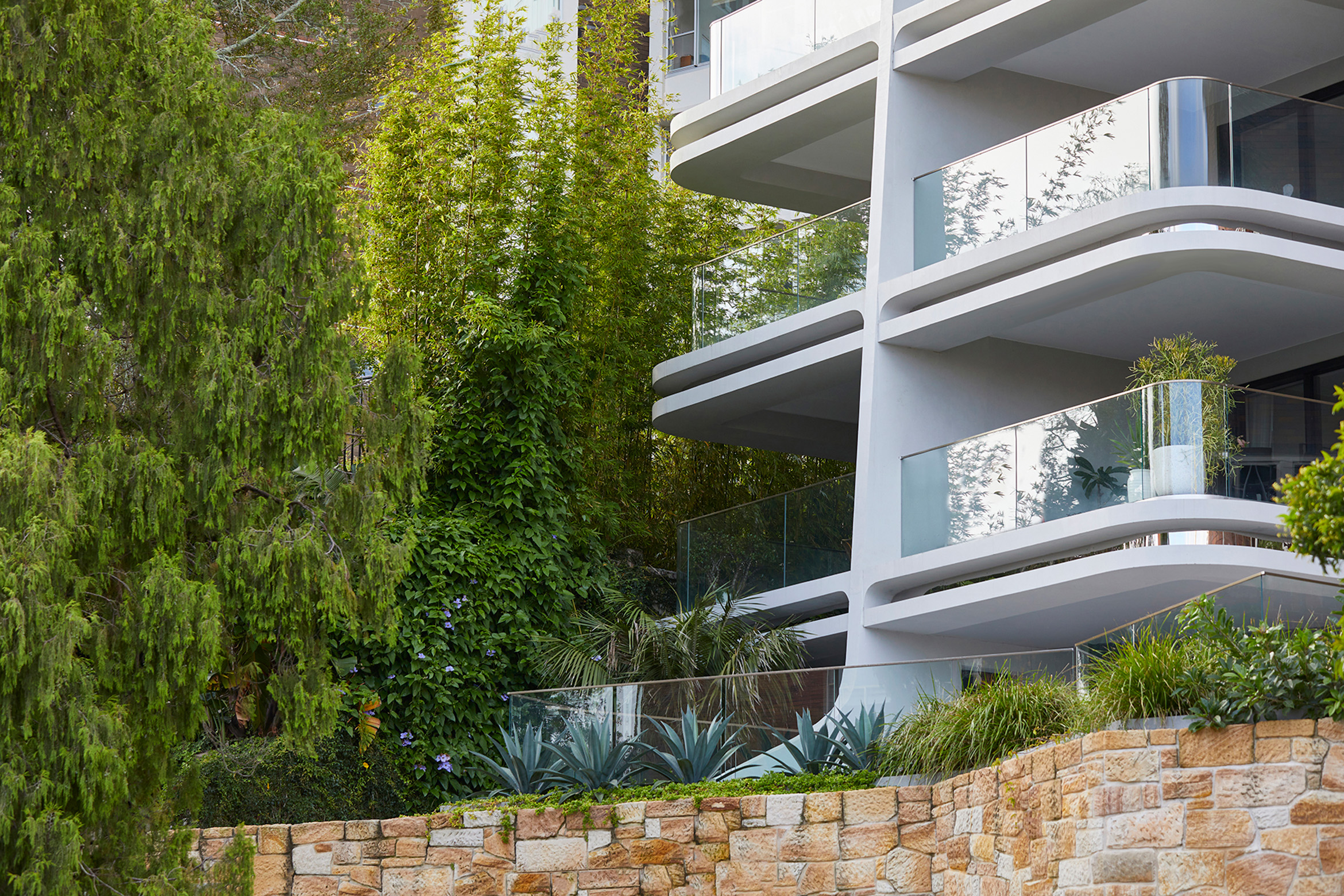
A whole new urban precinct is rapidly emerging, extending the Sydney CBD in the process. New residential towers, retail and hospitality amenity, new landscaping and urban renewal are the features of this joint development by Frasers Property and Sekisui House. A standout feature are the vertical gardens – all 1200 square metres of them. They are the work of French botanist extraordinaire, Patrick Blanc.
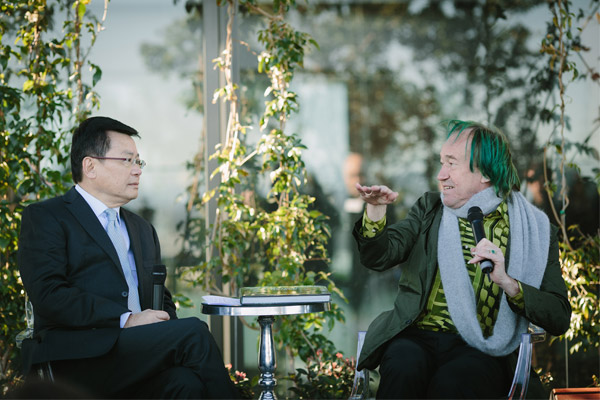
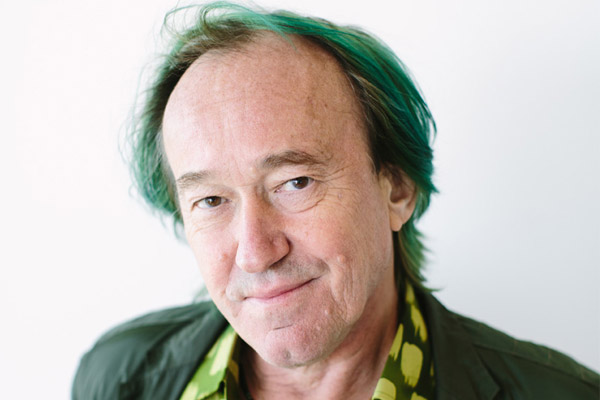
Blanc is in Sydney for a final inspection of his work and there was a chilly wind on the iconic cantilevered Sky Garden last Monday as Blanc spoke about this and his other projects around the world.
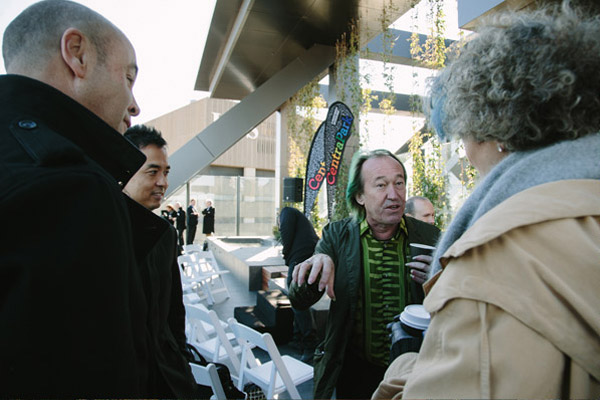
In fact, the wind was appropriate. Every part of the world, Blanc told us, throws up its own challenges as far as vertical gardens are concerned. In Sydney, it is wind. There is also the challenge of making the greenery interesting all year round. Hence, the 380 exotic and native species which will ensure that this wall has colour all the time.
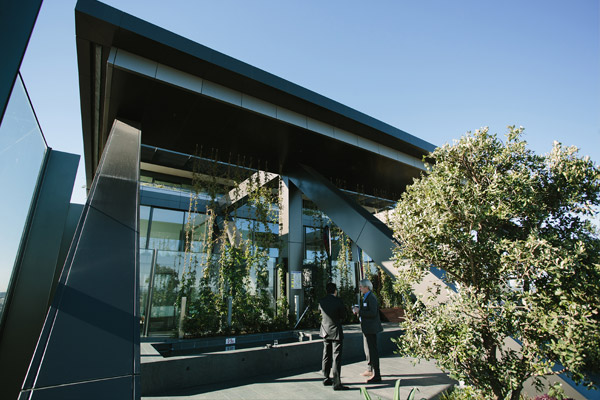
And for residents this means their own gardens in the sky. But Central Park is also Blanc’s highest achievement, two of the panels coming in at 116 metres.
All of which means that Central park will be more Blanc than bland.
Patrick Blanc
verticalgardenpatrickblanc.com
Central Park Sydney
centralparksydney.com
INDESIGN is on instagram
Follow @indesignlive
A searchable and comprehensive guide for specifying leading products and their suppliers
Keep up to date with the latest and greatest from our industry BFF's!
In the first instalment of our three-part series exploring what it means to sit your best, we pose the question to Gray Puksand’s Dale O’Brien, who discusses the importance of ease and majority rule when it comes to sitting and reveals why specifying a task chair is not unlike choosing a Volvo.
Stepping into Intuit’s Sydney workplace certainly doesn’t feel like walking into an office. Why? In this film, we discover that, when joy takes precedence as a design driver, even a high-performing commercial CBD headquarters can feel like an intuitive wonderland that invites employees to choose their own adventure.
Blending versatile cooking with smart performance, Bosch AccentLine appliances bring a quieter sense of order and simplicity to the modern kitchen.
In the second instalment of our performance seating three-parter, we turn to DKO’s Michael Drescher and Jacob Olsen to peek behind Sayl’s confident architectural form and explore the ideas of inclusivity, adaptability and freedom to move as hallmarks of what sitting your best actually means.
As a significant renewal of an established social housing project, JPW’s recently completed Cowper Street Housing in Glebe, Sydney aims to bring sustainable and community-focused density to an inner city suburb.
In the last instalment of our three-part performance seating series, Alex Bain from Architectus explains why sitting well shouldn’t feel like sitting at all and explores an unexpected success metric of the hybrid workplace: the grounding power of emotional support.
The internet never sleeps! Here's the stuff you might have missed

Designed by Billard Leece Partnership, the Wattle Building brings expanded clinical services together with a more legible, family-centred experience of hospital care.
With a plethora of talks, installations, exhibitions and happenings responding to this year’s theme (Design The World You Want), the eleven-day festival was the largest to date and arguably the most accomplished since inception.
Hosted at Savage Design in Sydney, the first Indesign Social Club brought emerging architects and designers together for a smaller, more open conversation on participation, making and the future of practice.
The Geelong College’s Sport and Wellbeing Centre ‘Belerren’ designed by Wardle is designed around bringing in natural light. But Shade Factor’s job was to help modulate and precisely control it for the most important competitive moments.