The home of architecture and design in the Asia-Pacific
Get the latest design news direct to your inbox!

Get the latest design news direct to your inbox!
Melbourne-based designer and lecturer Mark Watson shares his impressions of this year’s ICSID Interdesign workshop in Mumbai and the value of applying an injection of international expertise to a local set of issues.
July 21st, 2014
There are not many opportunities for designers to represent their country. Unlike the sporting arena where the world’s elite athletes are called together to test their skills in the pursuit of excellence, Design does not have an Olympics.
The closest Design does come to this epic event is through ICSID (International Council of Societies of Industrial Design) and its Interdesign Workshops.
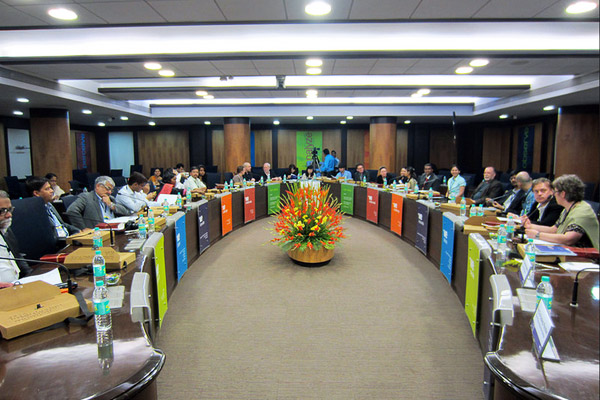
Every four years the design world is called to participate in an international event held in a different country to contribute their expertise in battling social, environmental and economic problems. This time around, the host venue was Mumbai. Dubbed the “Maximum City” by Suketu Mehta in his 2004 book, Mumbai (formerly Bombay) is the capital city of the State of Maharashtra and is undoubtedly the financial capital of India.
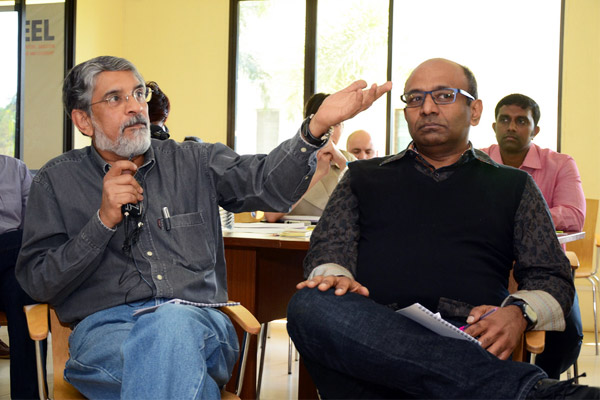
Mark Watson addressing group
This aspect has attracted a metropolitan population of 20 million people, half of which live in illegal dwellings like the Dharavi slums.
The Interdesign Mumbai workshop was sponsored by WeSchool, one of India’s leading B Schools, under the leadership of Professor Sudhakar Nadkarni, former Head of the prestigious Industrial Design Centre at the Indian Institute of Technology. 20 international designers were selected for their engagement with India and ratified by the ICSID international panel to work with 20 of India’s brightest designers.
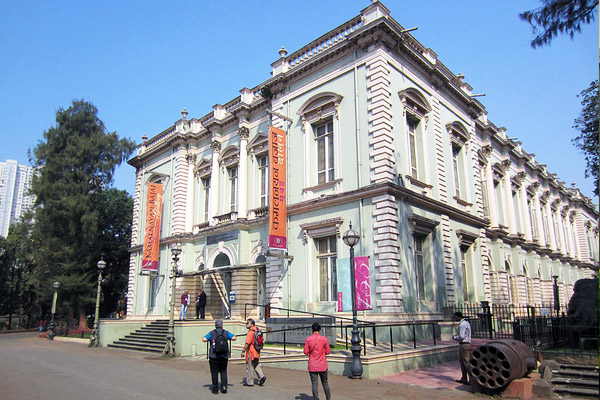
We were assembled at the WeSchool campus in Matunga, a ‘Garden Suburb’ designed at the turn of the 20th century, and encouraged to move about the metropolis, immersing ourselves in the environment to research the depth and breadth of the situation on the ground.
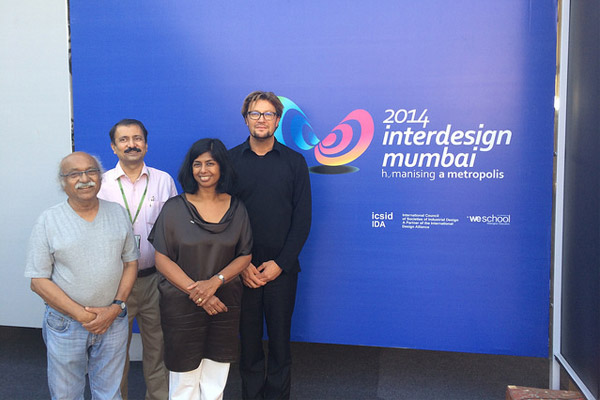
Image L-R Prof. Nadkarni, Prof Pendse, Ms. Dilki de Silva, Secretary General, ICSID, Dr. Brandon Gien, Australia, President
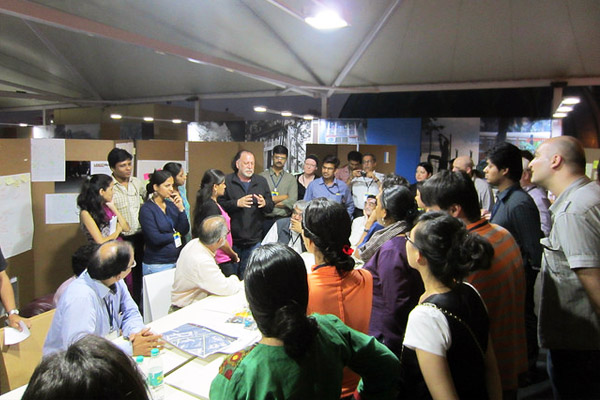
Teams were established to look at Water, Waste, Health, Community and Commerce. I was selected to research the world of retail in Matunga, from their strip shop merchants to their market bazaars to their legal and illegal street traders. My group assembled in a two week period a scheme to progress the retail environment to 2025.
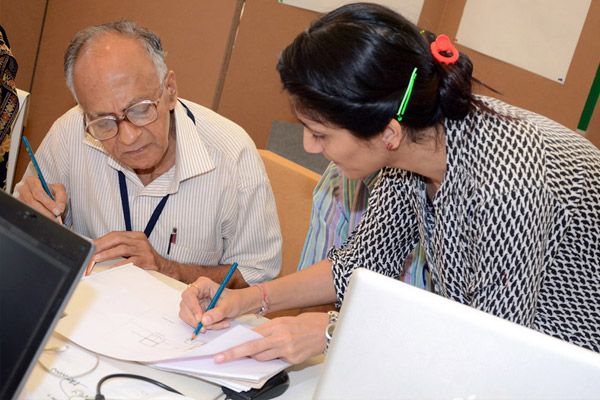
Some designed portable stalls for the street traders while I set off in search of potential spaces not thought of by local designers. With space a premium in the Maximum City, areas like the underside of road flyovers were explored, but ultimately a scheme was devised for building a structure over the city’s main railway infrastructure to host a central Market destination for the metropolis of Matunga.
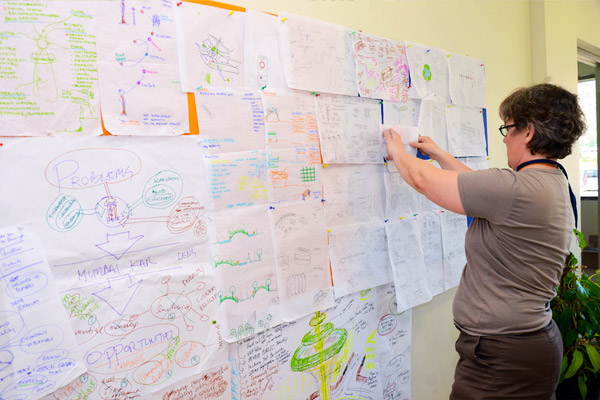
Other groups devised floating reservoirs and recycling systems for waste which surprisingly hadn’t been developed before in Mumbai. The international presence in Matunga brought by Interdesign resulted in media attention and therefore the interest of Government authorities, and some projects have been seriously taken up.
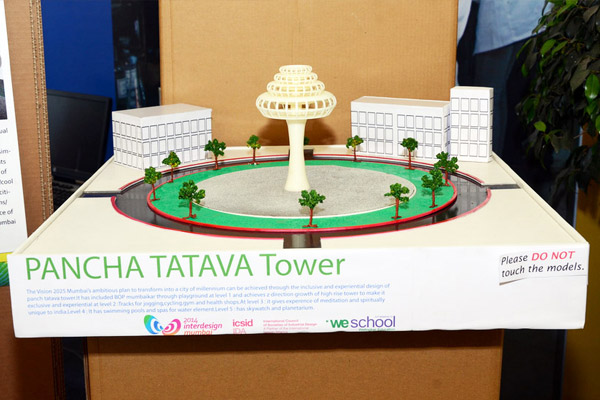
My Matunga Market concept is a kernel of an idea being taken under the wing of Prof Nadkarni and local architect Ratan Batliboi, designer of Mumbai’s monorail project, so we hope that as with the Olympics, friendships and connections will grow, with the projects bringing a better design to the Metropolis of Matunga, Mumbai.
ICSID
icsid.org
INDESIGN is on instagram
Follow @indesignlive
A searchable and comprehensive guide for specifying leading products and their suppliers
Keep up to date with the latest and greatest from our industry BFF's!
The internet never sleeps! Here's the stuff you might have missed